Germany Holidays are not exactly the same everywhere, and the reason is Germany federal system.
While several holidays apply across the country, each federal state can establish additional statutory holidays, which means your location can directly affect when schools, shops, offices, and workplaces close.
Why Are Public Holidays Different Across Germany?
Germany has 16 federal states, and public holidays are largely regulated at state level.
The main federal exception is the Day of German Unity, which applies nationwide.
Several other major holidays are also recognized throughout Germany by all states.
This system reflects Germany federal structure and its regional history, including differences in religious traditions.
- Most major Christian holidays are nationwide.
- Some religious holidays are recognized only in certain states.
- A few holidays are connected to regional history, culture, or local legislation.
- The result is that residents in different states can have different numbers of statutory days off.
For someone moving to Germany for work, university, Ausbildung, or family reasons, this can be confusing at first.
Two people working for similar employers can have different public holidays simply because they live or work in different Bundesländer.
Your federal state can change your public-holiday calendar even when your employer and job are otherwise similar.
Which Germany Holidays Apply Throughout?
There is a common core of statutory holidays that workers across Germany generally recognize as public holidays.
These include New Year’s Day, Good Friday, Easter Monday, Labour Day, Ascension Day, Whit Monday, the Day of German Unity, and the two Christmas holidays.
These nationwide holidays provide the basic holiday calendar, while state-specific holidays are added on top.
- New Year’s Day
- Good Friday and Easter Monday
- Labour Day, Ascension Day and Whit Monday
- Day of German Unity and the Christmas holidays
The practical effect is simple: a resident in a state with additional statutory holidays may receive more public-holiday days than someone in a state without those additional holidays.
However, the number of holidays alone does not determine how much extra free time someone actually gets.
A public holiday that falls on a weekend does not automatically create a replacement weekday off under a general nationwide rule.
State-Specific Holidays You Should Know
The biggest differences come from holidays that are legally recognized in particular states or, in some cases, only in particular areas within a state.
Examples include Epiphany, Corpus Christi, Reformation Day, All Saints’ Day, the International Women’s Day, the World Children’s Day, and the Day of Repentance and Prayer.
The exact combination depends on the Bundesland.
A simplified overview looks like this:
| State or group | Examples of additional statutory holidays |
|---|---|
| Baden-Württemberg | Epiphany, Corpus Christi, All Saints’ Day |
| Bavaria | Epiphany, Corpus Christi, Assumption, All Saints’ Day |
| Brandenburg | Reformation Day and additional Easter/Pentecost statutory recognition |
| Berlin | International Women’s Day |
| Bremen, Hamburg, Lower Saxony, Schleswig-Holstein | Reformation Day |
| Hesse | Corpus Christi |
| Mecklenburg-Vorpommern | International Women’s Day, Reformation Day |
| North Rhine-Westphalia | Corpus Christi, All Saints’ Day |
| Rhineland-Palatinate | Corpus Christi, All Saints’ Day |
| Saarland | Corpus Christi, Assumption, All Saints’ Day |
| Saxony | Reformation Day, Day of Repentance and Prayer |
| Saxony-Anhalt | Epiphany, Reformation Day |
| Thuringia | World Children’s Day, Reformation Day |
Some holidays have territorial exceptions rather than applying uniformly across an entire state.
Corpus Christi, Assumption, and other religious holidays can therefore require a more local check, particularly when municipal or historical rules are involved.
The table is useful for orientation, but the exact legal position should always be checked for the place where you work or attend school.
Why Religion and Regional History Matter
Germany public-holiday system is strongly connected to its historical religious geography.
Areas with stronger Catholic traditions tend to recognize certain Catholic feast days, while many states with Protestant historical traditions recognize Reformation Day.
This is one reason neighboring states can have different holiday calendars even though they are geographically close.
- Catholic traditions influence holidays such as Corpus Christi and All Saints’ Day.
- Protestant traditions explain the importance of Reformation Day in several northern and eastern states.
- Some holidays have developed from regional legislation rather than nationwide rules.
- Historical and cultural factors continue to influence the modern calendar.
For international residents, this explains why simply searching for “German public holidays” may not be enough.
The same country can have different statutory days off depending on the Bundesland.
How Public Holidays Affect Work and Everyday Life
A statutory public holiday is generally a day of work rest, although German law provides exceptions for certain sectors and activities.
Hospitals, emergency services, transport, hospitality, and some other operations may continue working when ordinary offices and many businesses are closed.
For everyday life, one of the most visible effects is that most shops and supermarkets are closed on Sundays and public holidays.
Certain businesses, such as some petrol stations and railway-station shops, can operate under specific rules.
- Check supermarket opening times before a holiday.
- Do important shopping before the closure.
- Expect many government offices to be unavailable.
- Check whether your workplace has sector-specific rules.
Public holidays can also affect appointments, deliveries, bank-related services, public administration, and transport schedules.
For employees who normally work Monday to Friday, the effect is straightforward when a public holiday falls on a regular working day.
But people working shifts should look at their employment contract, collective agreement, and applicable labour rules because holiday work is subject to specific exceptions and compensation arrangements.
Public Holidays and School Holidays Are Not the Same
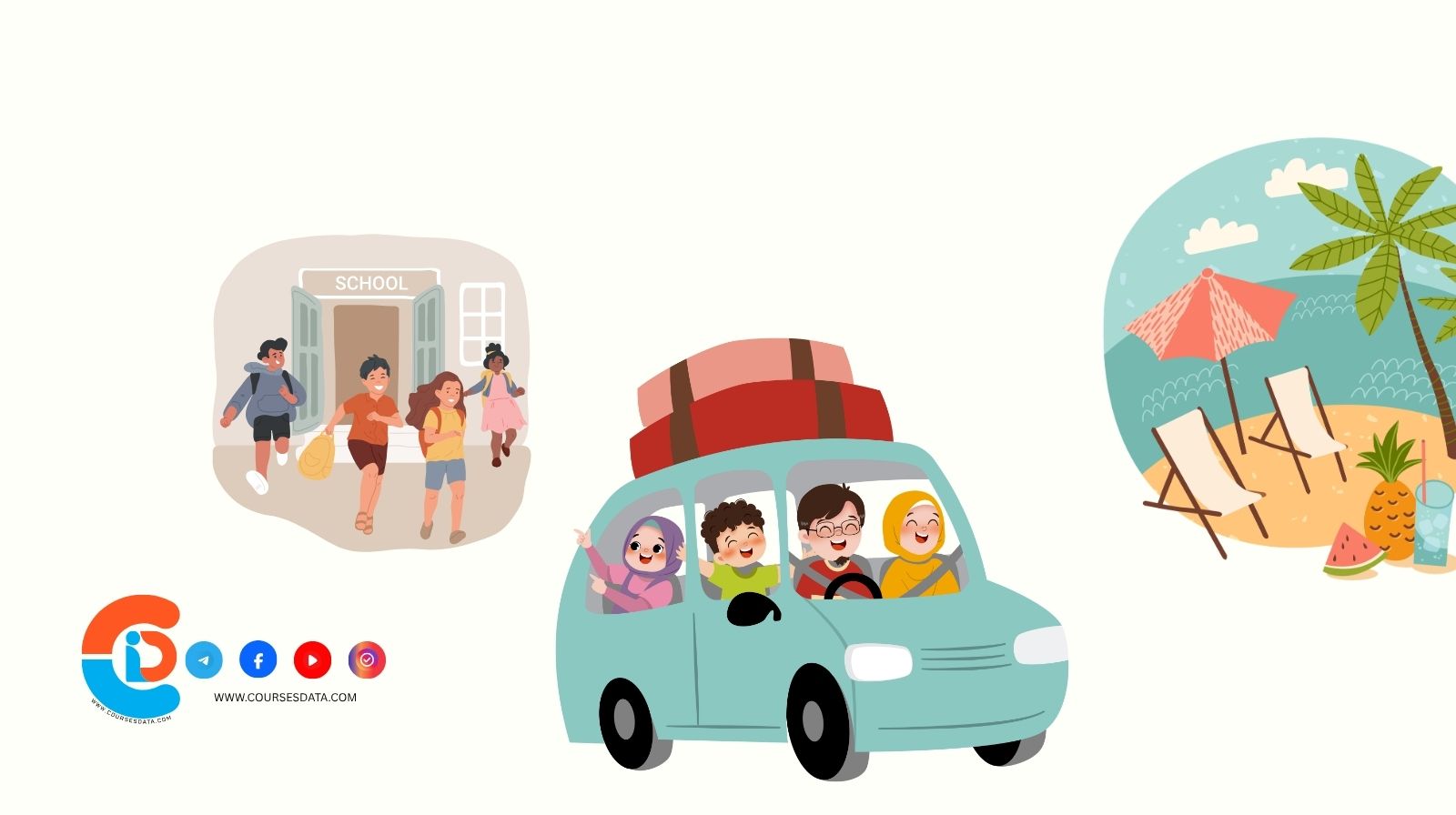
One common mistake is to treat public holidays and school holidays as the same thing.
Public holidays are statutory days off established under holiday law.
School holidays are separate periods set through the education system of the federal states.
- A public holiday may create one day without school.
- School holidays cover longer periods.
- School holiday schedules also vary by state.
- Universities may follow their own semester and closure schedules.
This distinction matters for families planning childcare, travel, or appointments.
A school may be closed during a holiday period even when there is no statutory public holiday on every day of that period.
What This Means for Students, Workers, and New Residents
Knowing your state’s holiday calendar is particularly useful when you are studying, starting a job, or moving to Germany.
A student planning an appointment with a government office, for example, should check both the public-holiday calendar and the institution’s opening information.
A worker may also need to know whether a holiday applies based on the location of the workplace rather than simply the place where they live.
- Students should check their university or school calendar.
- Employees should check the holiday rules that apply to their workplace.
- Families should verify school closures separately.
- New residents should learn the name of their Bundesland and its statutory holidays.
This is especially important when living close to a state border.
Someone may live in one federal state but commute to another, creating situations where the relevant public-holiday rules need to be checked carefully.
In Germany, “Is it a holiday?” can depend on where you are.
The safest approach is to identify the Bundesland connected to your workplace, school, or public service and then consult the relevant official calendar.
How to Check Your Exact Public Holidays
Because state and local exceptions exist, checking the exact holiday calendar is more reliable than relying on a generic national list.
Government and state websites provide information about statutory holidays and related regulations.
The federal government’s “Make it in Germany” portal also explains that public holidays are determined by the federal states, while Berlin’s official information, for example, lists the statutory holidays that apply specifically in Berlin.
A simple method is:
- Identify your Bundesland.
- Check its official public-holiday information.
- Verify whether the holiday applies nationwide within the state or only to certain areas.
- Check your employer, school, or public office for additional closure information.
This is more useful than memorizing a single Germany-wide list because the legal answer can change according to location.
For planning travel or appointments, also remember that a public holiday may create a wider disruption than just one closed office.
Shops, public authorities, schools, and services can all have different operating arrangements.
Conclusion
Germany holidays differ from state to state because public-holiday legislation is largely part of the federal states’ responsibilities.
A nationwide group of holidays forms the common calendar, while additional statutory holidays reflect regional religious traditions, history, and state legislation.
For residents, the practical lesson is simple: do not rely only on a national German holiday list.
Check the Bundesland that applies to your workplace, school, or appointment, especially when you are planning important errands, travel, or time off.
FAQ About Germany Public Holidays
1. Are public holidays the same in all of Germany?
No.
Germany has several nationwide public holidays, but the federal states can establish additional statutory holidays.
This is why the holiday calendar can vary from one Bundesland to another.
2. Who decides public holidays in Germany?
Public holidays are generally determined by the federal states through their own laws.
The Day of German Unity is the main exception because it is established by federal law and applies throughout Germany.
3. Which holidays are celebrated throughout Germany?
The nationwide calendar includes major holidays such as New Year’s Day, Good Friday, Easter Monday, Labour Day, Ascension Day, Whit Monday, the Day of German Unity, and the Christmas holidays.
4. Does Bavaria have different public holidays from Berlin?
Yes.
Bavaria has several additional statutory holidays that Berlin does not have, while Berlin has its own additional holiday.
This is a direct result of state-level holiday legislation.
5. Is Reformation Day a public holiday everywhere in Germany?
No.
Reformation Day is a statutory public holiday in several federal states, particularly in parts of northern and eastern Germany, but not across the entire country.
6. Is Corpus Christi a public holiday in all German states?
No.
Corpus Christi is a statutory holiday in several states, including North Rhine-Westphalia, Bavaria, Baden-Württemberg, Hesse, Rhineland-Palatinate, and Saarland.
There are also certain regional arrangements in parts of other states.
7. Are shops open on public holidays in Germany?
Most shops and supermarkets are closed on public holidays, although specific exceptions exist.
Petrol stations, some shops at transport hubs, and other businesses may operate under applicable rules.
8. Do public holidays automatically give employees another day off when they fall on a weekend?
Not generally.
Germany does not have a universal rule that automatically moves every weekend public holiday to the next working day.
Individual employment arrangements or collective agreements can provide different benefits.
9. Do public holidays apply to schools as well as workplaces?
Public holidays generally mean there is no regular school instruction, but school holidays are a separate system.
Each federal state has its own school-calendar arrangements, so students and parents should check both schedules.
10. Where can I check the public holidays for my state?
The most reliable source is the official information provided by your federal state.
Federal government services can also explain the general system, while state websites provide the specific statutory holidays that apply locally.
Source: https://publicholidays.de/
I’ve lived in two different states in Germany, and it’s wild how much the holiday calendar changes just by crossing a border—I still miss having All Saints’ Day off like I did in Bavaria. It really makes you appreciate how the federal system isn’t just politics, but something you feel in your daily routine. Do you find that the regional holidays affect how connected people feel to their local identity compared to national ones?
That’s such a great point—I’ve always felt that regional holidays like All Saints’ Day or Epiphany really anchor you to the local culture in a way national ones don’t. When I lived in Baden-Württemberg, I loved how those extra days off made the community feel more distinct, almost like a quiet reminder of historical ties. I think they definitely strengthen local identity, because they’re tied to traditions you actually see your neighbours celebrating, not just a date on a calendar.
You’re absolutely right—there’s something special about seeing your neighbors actually live out those traditions, like walking to church on All Saints’ Day or decorating for Epiphany. It makes the holiday feel personal, not just a day off. I think that’s why I still feel a little pang of envy every November when my Bavarian friends post their quiet, candlelit photos.
Oh, I know exactly what you mean about that pang of envy—there’s a warmth in those local traditions that a generic day off just can’t replicate. I grew up in North Rhine-Westphalia, and we always had All Saints’ Day, but moving to Berlin for work felt like losing a quiet anchor in the year. It’s not just about the day itself, but the way the whole neighborhood shifts into a slower, more reflective rhythm that you can’t get from a national holiday.
That shift in neighborhood rhythm is exactly what I miss most—there’s something about seeing everyone slow down together that makes you feel part of something bigger. I remember as a kid in Bavaria, the whole street would go quiet by mid-afternoon, and you’d just see candlelight flickering in windows, like a shared breath before winter. National holidays just don’t have that same intimate, grounding pull.
Yeah, that envy hits hard when you see those photos—it’s not about the day off, it’s the whole atmosphere you can’t replicate. I’ve had the same thing with friends in Bavaria posting their All Saints’ stuff while I’m just looking at a normal calendar day here in Berlin. It really shows how those local traditions give a holiday weight that a national one just can’t carry.
Oh, you’ve really hit on something there—when I lived in Bavaria, I loved how All Saints’ Day wasn’t just a day off but a moment when the whole town seemed to pause, and you’d see families tidying graves and lighting candles in the afternoon light. It’s that shared, visible rhythm that makes you feel rooted in a place, not just passing through. National holidays like Unity Day are important, but they don’t have that same intimate, neighborly feel that makes you truly belong.
Yeah, I’ve noticed that too. Moving from Hessen to Berlin meant losing a couple of region-specific holidays, and it honestly felt like the local calendar suddenly had a few blank pages. It makes you wonder if the push for more uniform national holidays would water down that regional pride, or if people would just find other ways to mark those days anyway.
You really hit on something there—when I moved from Baden-Württemberg to Hamburg, losing Epiphany felt like the calendar had gone silent, and I remember actually marking it myself that first January just out of habit. I think uniform holidays would definitely dilute that sense of place, because those regional days are tied to specific histories and local practices that you can’t just swap for a generic day off. People might still mark them privately, but without the shared community rhythm, it just wouldn’t feel the same.
That whole conversation about missing the quiet rhythm of All Saints’ Day really struck a chord with me. I grew up in a small town in Bavaria, and even now, living in Hamburg, I catch myself instinctively looking for that hush on the first of November, only to find the city just carrying on as usual. Do you think the lack of that shared, reflective pause in places like Berlin or Hamburg changes how people experience the turn of the seasons, or is it just something you adapt to and stop noticing after a while?