What is the Turkish Language Proficiency Test (TYS) and how do I prepare for it?
Are you planning to study or work in Turkey and wondering, “What is the Turkish Language Proficiency Test (TYS) and how do I prepare for it?” This comprehensive guide covers everything from exam structure and registration to expert preparation strategies, ensuring you achieve the score you need for your academic or professional goals.
Understanding the Turkish Language Proficiency Test (TYS)
The Turkish Language Proficiency Test, known locally as Türkçe Yeterlik Sınavı (TYS), is the standard international examination for measuring Turkish language skills. Developed and administered by the Yunus Emre Institute (YEE), it functions similarly to the TOEFL or IELTS exams for English. This test provides standardized proof of your ability to read, write, listen, and speak Turkish at an academic level.
Institutions across Turkey and internationally recognize this certification for various purposes. Whether you are a student seeking exemption from university preparatory years or a professional aiming to boost your resume, this exam is your gateway. The test aligns strictly with the Common European Framework of Reference for Languages (CEFR) proficiency definitions.
Official Body: Administered globally by the Yunus Emre Institute (YEE).
Primary Purpose: Proving language proficiency for university admission and job applications.
Standards: Based on CEFR criteria (A1 to C2 levels).
Recognition: Accepted by all Turkish universities and many international employers.
Exemption: High scores allow students to skip mandatory Turkish preparatory language courses.
Format: Paper-based exam conducted in three distinct sessions.
Availability: Held three times a year usually in January, May, and September.
Locations: Available at YEE cultural centers worldwide and in major Turkish cities.
Certification: Successful candidates earn the “Turkish Proficiency Certificate.”
Validity: The certificate is generally valid for two years for academic registration.
Who Should Take the TYS Exam?
Anyone looking to formalize their knowledge of the Turkish language should consider taking the TYS. It is particularly crucial for international students who have been accepted into Turkish universities but do not want to spend a year in a language preparatory school. Holding a C1 level certificate often allows for direct entry into undergraduate or graduate programs.
Professionals seeking employment in Turkey or with Turkish companies abroad also benefit significantly. A verified proficiency score demonstrates cultural competence and communication skills that are highly valued in sectors like tourism, trade, and diplomacy. Even hobbyists take the exam to measure their progress objectively against international standards.
International Students: Required for exemption from university language prep years.
Job Seekers: Essential for foreigners applying for positions in Turkish companies.
Academics: Researchers focusing on Turkish studies or history.
Translators: Proof of competency for freelance or agency work.
Diplomats: Staff working in foreign missions within Turkey.
Teachers: Non-native Turkish language instructors needing certification.
Citizenship Applicants: Useful evidence of integration and language skills.
Language Enthusiasts: Learners wanting an official benchmark of their level.
Erasmus Students: Those wishing to validate their skills after a semester abroad.
Visa Applicants: Can support long-term residence permit applications.
Detailed Breakdown of TYS Exam Structure
The TYS is rigorously structured to assess all four core language skills over a total duration of 180 minutes. The exam is divided into three main sessions, each focusing on specific competencies. Understanding this structure is vital for time management and strategic preparation.
You will face multiple-choice questions for the reading and listening sections, while the writing and speaking sections require productive language skills. The difficulty increases progressively, covering tasks ranging from simple comprehension to complex analysis.
This first session is the longest and tests your receptive skills. It combines reading comprehension with listening tasks to evaluate how well you process written and spoken Turkish.
Reading Duration: Approximately 60 minutes allowed for this subsection.
Reading Content: Texts include news articles, academic abstracts, and literary excerpts.
Reading Questions: 40 multiple-choice questions testing main ideas and details.
Listening Duration: Approximately 45 minutes allowed for this subsection.
Listening Content: Recorded announcements, interviews, and lectures.
Listening Questions: 30 multiple-choice questions based on audio tracks.
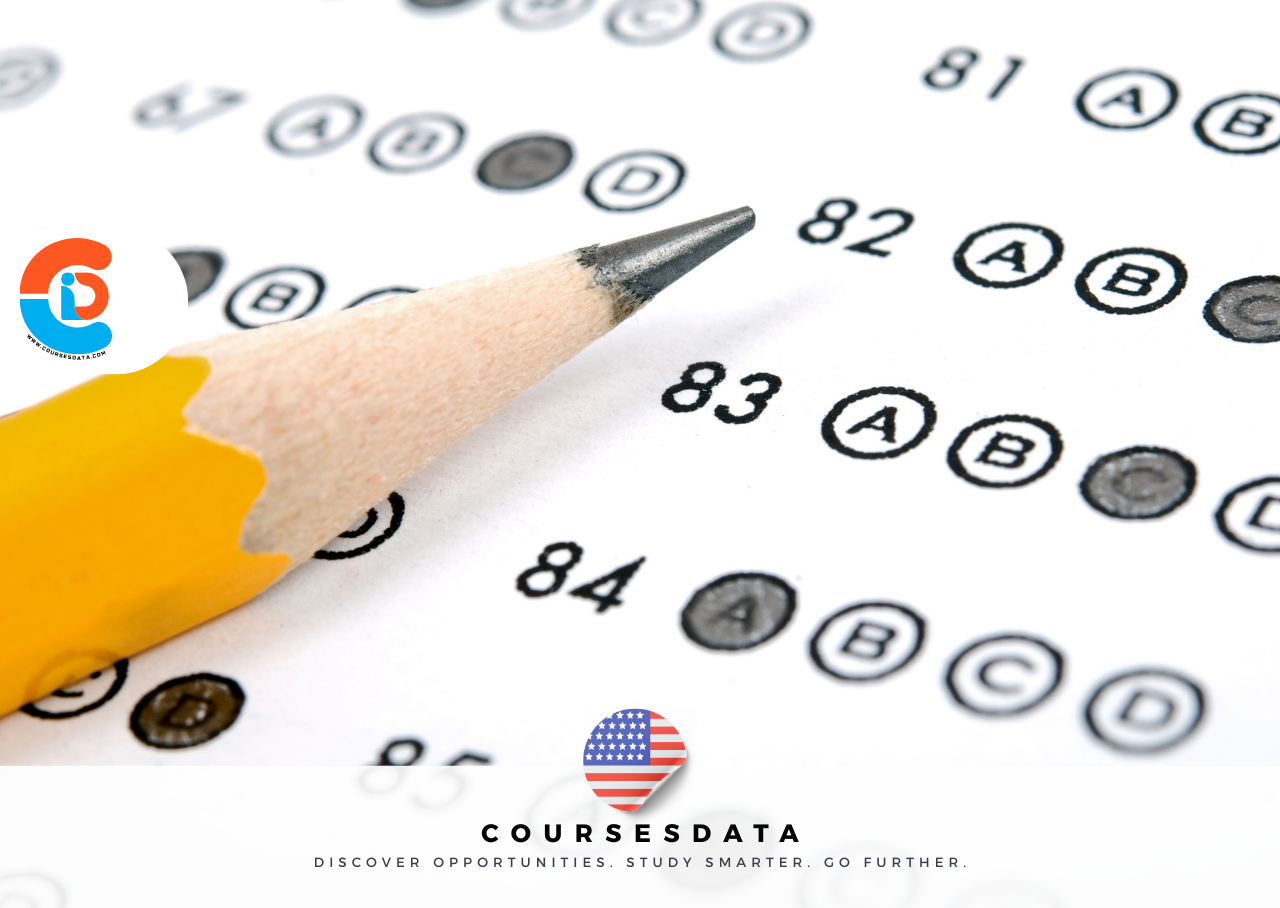
Format: Optical mark sheets are used for answers.
Skill Focus: Vocabulary retention, inference, and grasp of grammar in context.
Strategy: Skim texts quickly before reading questions to save time.
Audio Limit: Listening tracks are typically played only once.
Session 2: Writing (60 Minutes)
The writing session assesses your ability to express thoughts clearly, logically, and grammatically. You are expected to produce two distinct types of written text within the one-hour limit.
Task 1: A short composition or letter (e.g., email, apology, request).
Task 2: A longer essay on a general or argumentative topic.
Word Count: Typically requires 200–300 words total across both tasks.
Assessment Criteria: Grammar accuracy, vocabulary range, and coherence.
Topics: Social issues, technology, education, or cultural comparisons.
Format: Handwritten on provided answer sheets.
Structure: Must include a clear introduction, body paragraphs, and conclusion.
Style: Formal language is generally expected for the essay portion.
Time Management: Allocating 20 minutes for Task 1 and 40 minutes for Task 2 is recommended.
Penmanship: Legible handwriting is essential for examiners to grade effectively.
Session 3: Speaking (15 Minutes)
The speaking session is often the most nerve-wracking for candidates but is short and structured. It is conducted individually with an examiner and is often recorded for quality assurance.
Format: One-on-one interview with a certified examiner.
Part 1 (Independent Speaking): You answer questions about yourself or a familiar topic.
Part 2 (Conversation): You engage in a role-play or discussion based on a prompt.
Preparation Time: You are given a minute to think about the conversation prompt.
Duration: 5 to 7 questions are usually asked in the first part.
Focus: Pronunciation, fluency, grammar, and ability to sustain interaction.
Topics: Hobbies, future plans, daily life, or opinions on current events.
Interaction: The examiner may ask follow-up questions to test depth.
Scoring: Evaluated on vocabulary richness and grammatical correctness.
Confidence: Maintaining eye contact and speaking naturally boosts your score.
TYS Scoring System and Proficiency Levels
The total score for the TYS is 100 points, evenly distributed among the four skills. Each section (Reading, Listening, Writing, Speaking) is worth 25 points. To receive a certificate, you must not only achieve a high total score but also meet a minimum threshold in each section.
The Yunus Emre Institute awards certificates based on the following score ranges. Note that if you score highly overall but fail one specific section (e.g., score only 10/25 in Writing), you may not receive the higher-level certificate.
Proficiency Level
Score Range
Certificate Status
B2 Level
55 – 70 Points
Awarded “Turkish Proficiency Certificate” (B2)
C1 Level
71 – 88 Points
Awarded “Turkish Proficiency Certificate” (C1)
C2 Level
89 – 100 Points
Awarded “Turkish Proficiency Certificate” (C2)
Minimum Requirement: You typically need at least 50% (12.5 points) in each section.
B2 Certificate: Accepted for some undergraduate programs and workplaces.
C1 Certificate: The gold standard for most academic admissions.
C2 Certificate: Native-like proficiency, ideal for teaching or advanced research.
Result Announcement: Results are usually published 4–6 weeks after the exam.
Online Portal: Scores are accessed via the sinav.yee.org.tr system.
Validity: Certificates are valid for 2 years for university registration.
Re-evaluation: Candidates can appeal results within a specific window for a fee.
Physical Certificate: Sent to the examination center for collection.
Electronic Verification: Results can often be verified online by institutions.
Registration Process and Exam Fees
Registering for the TYS is a straightforward online process, but it requires attention to deadlines. The Yunus Emre Institute opens registration windows a few weeks before each exam date.
Fees vary depending on the country where you take the exam. In Turkey, the fee is denominated in Turkish Lira, while international centers charge in local currency or USD/EUR. It is generally affordable compared to other major language exams.
Website: Create an account at sinav.yee.org.tr.
Dates: Check the academic calendar for January, May, or September slots.
Profile: Upload a valid passport ID and a recent biometric photo.
Center Selection: Choose the nearest Yunus Emre Institute or university center.
Payment: Pay the exam fee via credit card or bank transfer.
Confirmation: Receive an exam entrance document (Sınav Giriş Belgesi).
Cost (Turkey): Approximately 1000–1500 TRY (subject to change).
Cost (International): Approximately $100–$150 USD depending on the region.
Deadline: Registration closes usually 10-15 days before the exam.
Refunds: Fees are generally non-refundable if you miss the exam.
How to Prepare for the Reading Section
Success in the reading section requires a robust vocabulary and the ability to parse complex sentence structures. Turkish is an agglutinative language, meaning a single word can contain a lot of grammatical information.
Focus on academic and formal texts during your practice. Reading newspapers and opinion columns is excellent preparation for the C1 level questions.
Read Daily News: Follow outlets like Anadolu Ajansı or BBC Türkçe.
Analyze Suffixes: Practice deconstructing long words to find the root.
Time Practice: Solve 40 questions within 60 minutes to build speed.
Vocabulary Lists: Create flashcards for academic and transition words.
Diverse Genres: Read short stories, news, and encyclopedia entries.
Skimming: Learn to identify the main idea without understanding every word.
Scanning: Practice finding specific names, dates, or facts quickly.
Connectors: Master conjunctions like halbuki, oysa, and nitekim.
Question Types: Familiarize yourself with “main idea” vs. “inference” questions.
Practice Tests: Use past TYS papers to understand the logic of questions.
Mastering the Listening Section
The listening section challenges your ability to keep up with native speed and various intonations. The audio is played only once, so active listening and note-taking are crucial skills to develop.
You must train your ear to distinguish between similar-sounding suffixes and words. Exposure to different voices and accents will prevent you from being thrown off during the actual exam.
Turkish Podcasts: Listen to SBS Turkish or Turkish Tea Time daily.
Note-Taking: Practice writing down keywords while listening to news.
TV Series: Watch Turkish dramas with Turkish subtitles, then without.
Radio: Stream live Turkish radio stations for authentic speed.
Predicting: Read the questions first to predict what information to listen for.
Focus on Keywords: Listen for transition words that signal a change in topic.
Dictation: Write down exactly what you hear to improve accuracy.
Dialects: Be prepared for standard Istanbul Turkish, the exam norm.
Background Noise: Practice listening in environments that aren’t perfectly silent.
Mock Exams: Simulate the exam environment with headphones and a timer.
Strategies for the Writing Section
Writing in Turkish requires mastering vowel harmony and complex suffix chains. Examiners look for varied sentence structures, accurate grammar, and coherent flow of ideas.
Do not just write simple sentences; use subordinating conjunctions and passive voice where appropriate to demonstrate advanced proficiency. Organization is key.
Structure: Always use an Introduction-Body-Conclusion format.
Connectors: Use words like buna ilaveten, sonuç olarak, and dolayısıyla.
Grammar Variety: Mix simple past tense with reported speech and conditional forms.
Spelling Rules: Pay strict attention to “dahi/de” separation and vowel harmony.
Task Response: Ensure you answer every part of the prompt.
Drafting: Spend 5 minutes outlining before you start writing.
Checking: Save 5 minutes at the end to check for suffix errors.
Formal Tone: Avoid slang and colloquialisms in the essay task.
Sample Essays: Read high-scoring model essays to understand expectations.
Feedback: Have a native speaker or teacher correct your practice writings.
Acing the Speaking Interview
The speaking section is your chance to show that you can communicate effectively and spontaneously. Fluency is often more important than perfect grammar, so keep talking even if you make a minor mistake.
The examiners are friendly and want to see what you can do, not just catch your mistakes. Relaxing and treating it as a conversation will help you perform better.
Self-Introduction: Prepare a flawless 1-minute intro about your life and goals.
Expand Answers: Never answer with just “Yes” or “No”; always explain “Why”.
Clarification: Learn phrases like Efendim? or Tekrar eder misiniz? if you miss a question.
Think Aloud: Use fillers like aslında, yani, or şey naturally to buy time.
Body Language: Smile and maintain engagement with the interviewer.
Opinion Phrases: Use bence, kanaatimce, and bana göre to state opinions.
Past Tense: Practice telling stories about your past experiences.
Future Tense: Be ready to discuss your future career or study plans.
Mock Interviews: Practice with a tutor or language partner regularly.
Record Yourself: Listen to your recordings to catch pronunciation errors.
Recommended Study Materials and Resources
Using the right materials can make a huge difference in your TYS preparation. While general language books are helpful, resources specifically designed for the TYS format are superior.
Focus on materials that align with the Yunus Emre Institute curriculum, as they create the exam.
“Yedi İklim Türkçe”: The official coursebook series by Yunus Emre Institute.
“İstanbul Yabancılar İçin Türkçe”: A widely used textbook series for all levels.
YEE Learn Turkish Portal: Official online learning platform (turkce.yee.org.tr).
“TYS Çıkmış Sorular”: Past exam papers available on the YEE website.
TurkishClass101: Great for listening and vocabulary supplements.
Busuu: Good for grammar practice and community feedback.
Tureng Dictionary: The most reliable English-Turkish online dictionary.
Netflix: “The Protector” or “Ethos” for listening immersion.
News Apps: “Bundle” app to read Turkish news from various sources.
YouTube Channels: “Turkishle” and “FC Turkish” for grammar explanations.
Essential Exam Day Tips
On the day of the exam, your mental state is as important as your preparation. Arriving early and being prepared with the right documents will reduce stress.
Make sure you know exactly where the test center is located. In large cities like Istanbul or Ankara, traffic can be unpredictable.
Documents: Bring your passport and Exam Entrance Document (printed).
Stationery: Bring soft lead pencils, an eraser, and a sharpener.
Arrival: Arrive at least 45 minutes before the exam starts.
Water: Bring a transparent bottle of water without a label.
Rest: Get a good night’s sleep; the exam is mentally exhausting.
No Electronics: Phones and smartwatches are strictly prohibited.
Instructions: Listen carefully to the proctors; rules are strict.
Breaks: There are short breaks between sessions; bring a snack.
ID Check: Be ready for identity verification at the entrance.
Relax: Take deep breaths before the speaking section to calm your nerves.
Frequently Asked Questions
What is the minimum score to pass the TYS?
There is no single u0022passu0022 score, but to receive a B2 certificate, you generally need a total score of at least 55 out of 100. Additionally, you must achieve at least 50% in each of the four sections.
How long is the TYS certificate valid?
For academic purposes, such as university registration in Turkey, the TYS certificate is typically valid for two years. However, for general employment or CV purposes, some institutions may accept it for longer periods.
Can I retake the exam if I fail?
Yes, you can retake the TYS as many times as you wish. There is no waiting period between exams, so you can register for the very next available session if you are not satisfied with your score.
Is the TYS exam difficult?
The exam is challenging because it is comprehensive and academic. However, if you have completed a B2 or C1 level Turkish course and practiced with past papers, it is very manageable. The structure is predictable and standard.
Where can I find past TYS exam papers?
You can find sample questions and some past papers on the official Yunus Emre Institute website (yee.org.tr) or the dedicated exam portal (tys.yee.org.tr). These are the best resources for understanding the question format.
Can I take the TYS online?
Generally, the TYS is a paper-based exam administered in person at designated centers. While some online pilots have been discussed, the standard certification exam is currently held face-to-face to ensure security.
Summary
The Turkish Language Proficiency Test (TYS) is your essential credential for unlocking educational and professional opportunities in Turkey. By understanding the exam structure, utilizing official resources like “Yedi İklim,” and practicing consistently, you can secure the C1 certificate you need for success.