
The Colombian Government Scholarship is a real funding route for international students, but it is not a single, simple program. Colombia runs several official scholarship schemes through its government agencies, and each one has its own eligibility rules, benefits, and application process. The most prominent is Beca Colombia, a program for foreign nationals managed by ICETEX that supports postgraduate study at Colombian universities. Understanding how these schemes differ—and how to prepare a competitive application using official sources—is essential before committing time and money to the process.
What the Colombian Government Scholarship Actually Covers
There is no single “Colombian Government Scholarship” office or universal application form. Instead, Colombia’s Ministry of Foreign Affairs and ICETEX coordinate different programs aimed at different groups. The two most relevant to international readers are Beca Colombia for foreign students and the scholarship support available through the Ministry’s diplomatic and academic cooperation channels.
Beca Colombia, run by ICETEX, is designed for foreign professionals, researchers, and students who want to pursue a specialization, master’s degree, or doctorate in Colombia. The award generally focuses on tuition support for the program, and in some cases it includes a monthly stipend and health insurance. The exact package depends on the program and the cooperation agreement behind it, so always check the official ICETEX website for current terms.
There is also a separate scheme for Colombian citizens studying abroad. If you are a Colombian national looking to study overseas, the Ministry of Foreign Affairs and ICETEX publish details of those programs separately. Do not confuse the two: Beca Colombia funds foreigners in Colombia, while other programs fund Colombians abroad.
Who Is Eligible for Beca Colombia
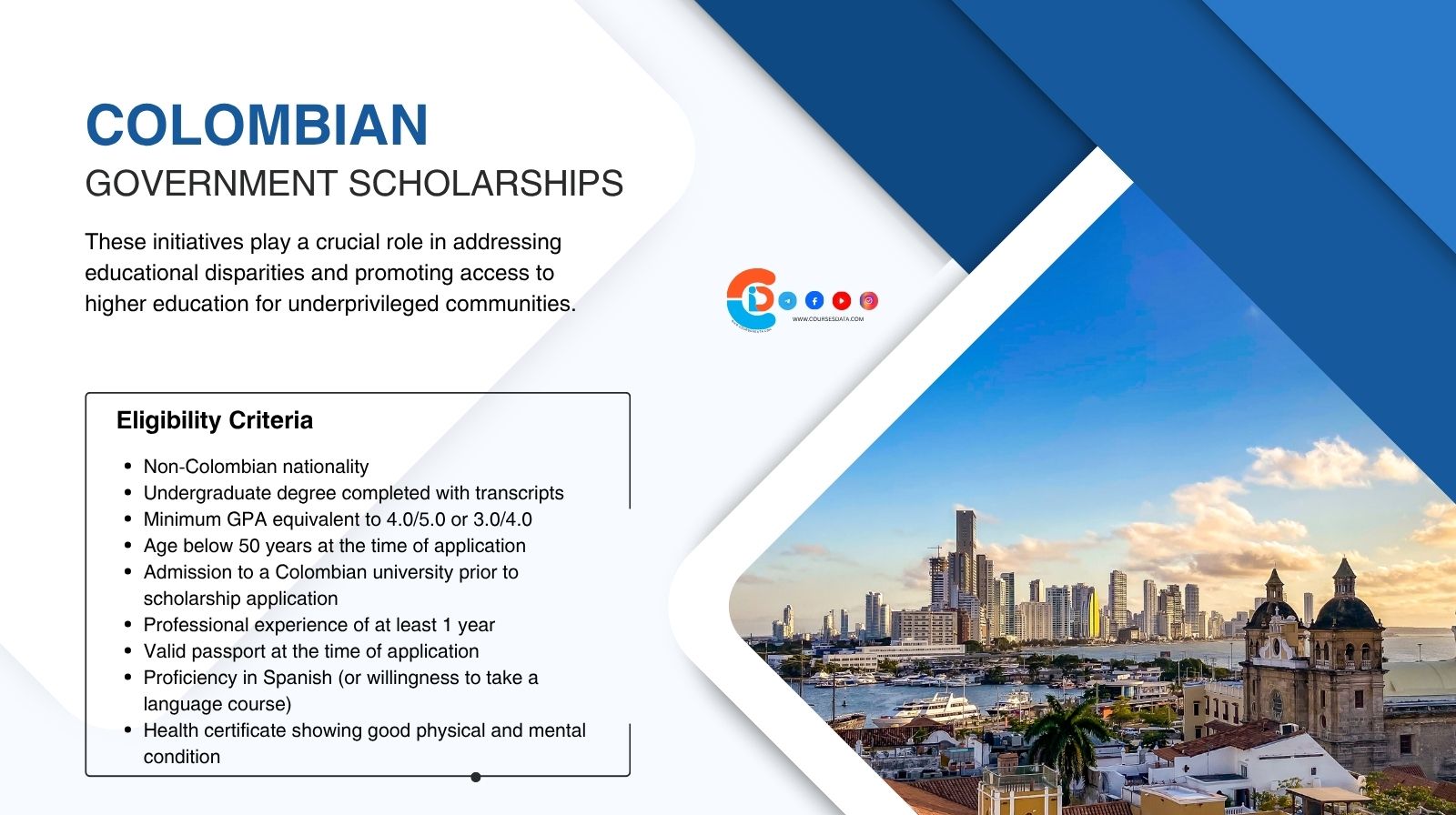
Eligibility depends on the specific call (convocatoria), but the general profile is consistent. Applicants are usually foreign nationals who do not hold Colombian citizenship, have a completed undergraduate degree, and meet the academic and language requirements of the chosen program. Each call lists the exact conditions.
- Be a citizen of a country other than Colombia, with a valid passport.
- Hold a bachelor’s degree or equivalent in a field relevant to the proposed study.
- Meet the academic requirements set by the host university program.
- Demonstrate sufficient Spanish proficiency for programs taught in Spanish, or English for English-taught programs.
- Not currently reside in Colombia for the purpose of the same study, unless the call allows it.
- Submit a complete application within the published deadline.
- Provide academic references and a motivation letter.
Some calls target specific regions or partner countries through bilateral agreements. If your country has a cooperation agreement with Colombia, the number of available places and the conditions may differ. Check the ICETEX scholarship portal and your own country’s education ministry for matching announcements.
How the Application Process Works
The process runs in stages, and missing a step usually means automatic disqualification. Start by identifying an open call, because Beca Colombia opens and closes in cycles rather than accepting rolling applications. Then confirm that the university program you want is on the approved list for that call.
- Review the current call for applications on the ICETEX site and note the deadline, required documents, and eligible programs.
- Choose an eligible postgraduate program at a Colombian university and confirm its admission requirements.
- Prepare your documents, including degree certificates, transcripts, passport, CV, motivation letter, and reference letters.
- Complete the online application form and upload everything before the deadline.
- Wait for the evaluation results and respond to any requests for additional information.
- If selected, follow the instructions for acceptance and enrollment at the university.
Applications are usually submitted through the official ICETEX application system. Keep digital and paper copies of every document, and make sure translations and apostilles are done in advance, since these can take weeks.
Documents You Will Typically Need
Document requirements vary by call, but the core set is predictable. Preparing them early is the single most effective way to avoid last-minute problems. A missing apostille or expired passport is a common reason applications fail.
- Valid passport with sufficient validity.
- Bachelor’s degree certificate, apostilled or legalized as required.
- Official academic transcripts.
- Curriculum vitae in the format specified by the call.
- Motivation letter explaining your study plans and career goals.
- Two or more academic or professional reference letters.
- Language proficiency evidence, if required by the program.
- Medical certificate, where the call requests one.
- Proof of admission or a letter of acceptance from the Colombian university, if applicable.
Translations into Spanish are often required for documents issued in other languages. Use a certified translator and confirm the legalization route for your country through the Colombian Ministry of Foreign Affairs.
Comparing the Main Scholarship Routes
The table below summarizes the broad differences between the main routes. These are general descriptions; the exact terms are set by each call and should be verified on the official pages.
| Program | Who It Is For | Typical Level of Study | Where to Apply |
|---|---|---|---|
| Beca Colombia (ICETEX) | Foreign students and professionals | Specialization, master’s, doctorate | ICETEX official portal |
| Ministry of Foreign Affairs cooperation programs | Foreign nationals under bilateral agreements | Varies by agreement | Ministry of Foreign Affairs channels |
| Scholarships for Colombians abroad | Colombian citizens | Postgraduate study overseas | ICETEX and Ministry channels |
| University-specific scholarships | Students admitted to a given university | Varies | The university’s own scholarship office |
What the Award Usually Includes
Benefits differ by program and by the cooperation agreement behind it. Some Beca Colombia awards cover full tuition; others cover a percentage. Stipends, health insurance, and travel support may or may not be included. Never assume a package based on a friend’s experience or an older blog post.
- Tuition or a tuition waiver for the approved program.
- A monthly living stipend, where the call states one.
- Health insurance during the study period, in some calls.
- Support for registration or enrollment fees, depending on the program.
- Access to the university’s academic and student services.
Read the “beneficios” section of the current call carefully. It is the only authoritative statement of what you will receive. If a benefit is not listed, treat it as not included until the awarding body confirms otherwise.
Choosing a University and Program
Your scholarship is tied to a specific program, so the choice matters as much as the application. Colombian universities range from large public institutions to specialized private ones, and not every program is eligible under every call. Confirm eligibility before you invest time in an application.
Look at the Ministry of National Education for information on accredited institutions and program quality. Public universities such as the National University of Colombia and major private universities publish their own international admissions pages, which explain language requirements, document legalization, and enrollment steps.
- Check that your program appears on the approved list for the call.
- Confirm the teaching language and required proficiency level.
- Review the university’s international student office guidance.
- Consider location, cost of living, and program duration.
- Contact the program coordinator with specific questions before applying.
Language Requirements and Practical Preparation
Most programs in Colombia are taught in Spanish, and universities usually expect a recognized proficiency level. Some institutions accept their own placement tests, while others require standardized certificates. If you are applying to an English-taught program, check whether the university accepts your existing test results.
Beyond language, plan for the practical side of moving to Colombia. You will need a student visa, which is processed through the Colombian visa portal operated by the Ministry of Foreign Affairs. The visa type and requirements depend on your program length and nationality, so check the official visa guidance early.
- Start Spanish study well before the application deadline if you are not fluent.
- Budget for document translation, apostille, and courier costs.
- Check visa processing times and apply as soon as you are accepted.
- Arrange accommodation through the university or verified providers.
- Keep copies of all correspondence with the university and ICETEX.
Writing a Strong Motivation Letter
The motivation letter is often where applicants lose points. Reviewers want to see a clear link between your background, the program, and your plans after graduation. Generic letters that could be sent to any university rarely succeed.
Explain why this specific program in Colombia fits your goals. Mention relevant academic or professional experience, and describe how you will use the qualification. If the call asks about contributing to cooperation between your country and Colombia, address that directly.
- Name the program and university explicitly.
- Connect your past work or study to the proposed field.
- State realistic post-study plans.
- Keep it within the word limit set by the call.
- Ask a mentor or colleague to review it for clarity.
Common Mistakes to Avoid
Most unsuccessful applications fail for avoidable reasons rather than weak qualifications. Small procedural errors carry real weight in competitive calls.
- Applying after the deadline or to a closed call.
- Choosing a program that is not on the approved list.
- Submitting documents without the required apostille or translation.
- Using an expired passport or outdated transcripts.
- Copying a motivation letter from another application.
- Ignoring the specific instructions in the call.
- Failing to respond to requests for additional information.
Conclusion
The Colombian Government Scholarship is best understood as a family of official programs, with Beca Colombia at the center for foreign students. Success depends on matching your profile to an open call, preparing documents early, and following the official instructions precisely. Use ICETEX and the Ministry of Foreign Affairs as your primary sources, verify every benefit and deadline in the current call, and treat older guides as background rather than authority.
Frequently Asked Questions
What is the Colombian Government Scholarship?
It refers to scholarship programs funded by the Colombian government, most notably Beca Colombia managed by ICETEX, which supports foreign students pursuing postgraduate study at Colombian universities. Several schemes exist, each with its own rules.
Who can apply for Beca Colombia?
Generally, foreign nationals who hold a bachelor’s degree and meet the academic and language requirements of an eligible program. Each call sets the exact conditions, including any country-specific agreements.
Does the scholarship cover tuition and living costs?
It depends on the call. Some awards cover tuition, while others include a stipend or health insurance. The benefits section of the current call is the only reliable source of what is included.
Do I need to speak Spanish to apply?
Most programs are taught in Spanish and require proof of proficiency. Some universities offer English-taught programs, but you must still meet their language requirements. Check the program page for details.
Can I apply without an admission letter from a Colombian university?
Some calls require prior admission or a letter of acceptance, while others allow you to apply and gain admission afterward. Read the specific call to confirm which applies to you.
How do I find open calls?
Open calls are published on the ICETEX website and, for cooperation programs, through the Ministry of Foreign Affairs. Check both regularly, as calls open in cycles rather than continuously.
Is there a scholarship for Colombian citizens to study abroad?
Yes, separate programs support Colombian nationals studying overseas. These are distinct from Beca Colombia and are announced through ICETEX and the Ministry of Foreign Affairs.
What documents are usually required?
Typically a passport, degree certificate, transcripts, CV, motivation letter, reference letters, and language evidence. Some calls also request a medical certificate or proof of admission.
Do I need a student visa if I receive the scholarship?
Yes, international students generally need a student visa. Apply through the official Colombian visa portal once you are accepted, and check the requirements for your nationality.
Can I work while studying on the scholarship?
Work permissions depend on your visa conditions and the scholarship terms. Check the official visa rules and the call’s conditions before accepting any employment.

I’ve been looking into this scholarship for a while now, and what really stands out to me is how they cover the visa and health insurance on top of tuition and living costs—that’s a huge relief compared to some programs that leave you sorting out those details yourself. I’m curious, though: does anyone know how competitive the selection process actually is for master’s applicants, especially if you’re coming from outside Latin America? I’d love to hear from someone who’s gone through it, because the language barrier with Spanish has me a bit nervous about the application essays.
The selection is extremely competitive, especially for non-Latin American applicants—think single-digit acceptance rates. Your Spanish doesn’t need to be flawless for the essays, but it does need to show genuine effort and clarity; I’d recommend having a native speaker review your work. Focus on how your research aligns with Colombia’s priorities, and you’ll have a better shot than most.
Let’s be real—covering visa and health insurance is nice, but it’s the bare minimum for a “fully funded” claim. What actually worries me is the language requirement: if the application materials and coursework are in Spanish, and you’re not fluent, are they really setting you up for success, or just checking a diversity box? Also, I’d want to see the actual acceptance rate for master’s programs, not just the marketing spin, because “competitive” can mean anything from 10% to 1%.
You’ve hit on exactly what made me hesitate too, Brett. I applied last year and the Spanish requirement is definitely the real filter—they’re not just checking a box, they expect you to engage with the material and culture, which means fluency matters far more than the visa coverage. As for the acceptance rate, it’s brutal for master’s applicants from outside Latin America—think well below 5%—so it’s not marketing spin, but if your research aligns with Colombia’s needs and you can prove you’ve worked on the language, it’s not impossible.
I actually went through the application process for the master’s track last year, and I’ll be honest—the Spanish requirement is the real gatekeeper. I’m from Canada and I’m not fluent, so I spent months on the essays with a tutor, and even then, I barely made the shortlist. The competition is fierce, but if you can prove your academic fit and show you’ve made an effort with the language, it’s not impossible—just don’t expect them to hand it to you for being an outsider.
It’s reassuring to hear from Kiri that showing genuine effort with the language can make a difference, because I’d be lying if I said the Spanish requirement didn’t intimidate me too. That said, I’m still wondering if there’s any flexibility for programs taught in English, or if you’re expected to be fully bilingual from day one. Has anyone here found a way to balance language prep with the rest of the application without burning out?
Great question, Niamh. From what I’ve seen and heard, a few Colombian universities do offer master’s programs taught in English, especially in STEM fields, so it’s worth checking each program’s language of instruction before you apply. Balancing language prep with the rest of the application comes down to carving out 20–30 minutes daily for Spanish practice and treating your essays as a two-step process: get the content right first, then polish the language with a tutor or native speaker. It’s a grind, but focusing on small, consistent steps keeps you from burning out while still making real progress.
Oh great, another “fully funded” scholarship that conveniently forgets to mention the real cost is three years of your life wrestling with bureaucratic Spanish and a 2% acceptance rate. But hey, at least they throw in the visa fee so you can feel fancy while you’re stressing over the language requirement. Kiri’s story about barely making the shortlist after months with a tutor is exactly the kind of reality check that should scare off anyone who thinks this is a casual application.
I really appreciate hearing from Kiri and Megan about the language prep—it’s the part that keeps me up at night too. I’m a native English speaker from the US, and I’ve been wondering if the selection committee values a polished but imperfect essay more than a perfect one that feels stiff. Has anyone here found that emphasizing a personal connection to Colombia or a specific research interest outweighed a less-than-fluent application?
Honestly, reading this thread makes me feel a bit better about my own nerves around the Spanish requirement—I’m from South Africa and my Spanish is shaky at best, so hearing Kiri’s story about barely making the shortlist after months with a tutor is both terrifying and oddly motivating. What I’m still unsure about is whether they look more kindly on applicants from non-Spanish-speaking countries if we can clearly show we’ve tried, or if they just expect fluency from the get-go. For anyone who’s been accepted, did you feel the application essays were judged more on language perfection or on the strength of your research proposal?