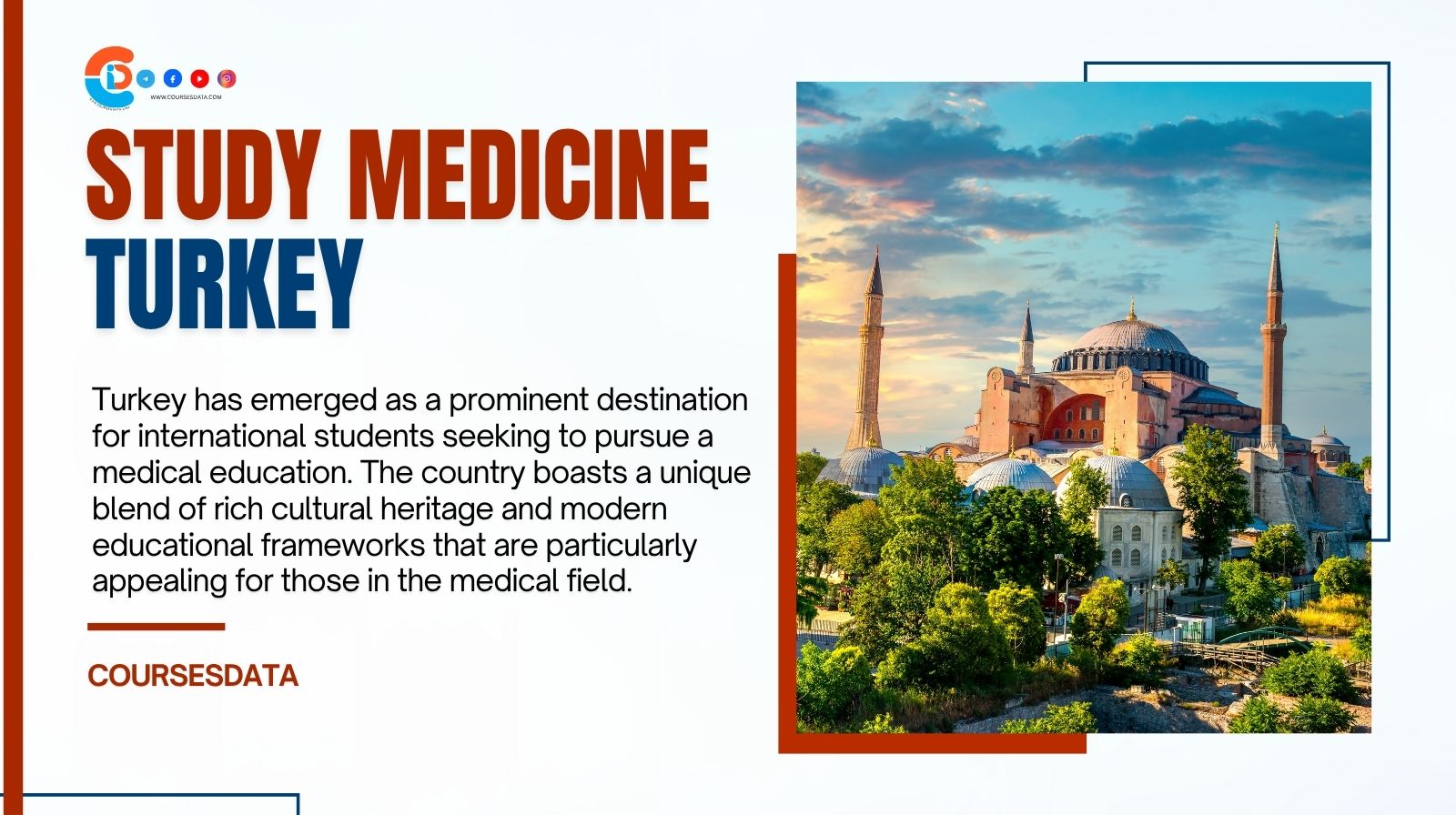
Looking to study medicine in Turkey? Here’s everything you need to know.
Turkey has become a leading destination for international students pursuing medical degrees. But what makes studying medicine in Turkey so appealing, and how does it compare globally? Here’s a complete guide to help you make an informed decision.
Why Choose Turkey for Medical Studies?
Turkey offers high-quality education, internationally recognized degrees, and affordable tuition fees. Its medical universities blend Western medical standards with advanced technology and experienced faculty.
- Modern, well-equipped hospitals and labs
- English-taught MBBS programs
- Global recognition of Turkish medical degrees
- Affordable living and tuition costs
- Opportunities for hands-on clinical experience
- Easy student visa process
- Cultural and historical richness
- Increasing number of accredited universities
- High success rate in USMLE and PLAB
- International student-friendly campuses
Top Medical Universities in Turkey
Choosing the right university is crucial. Turkey is home to both public and private institutions offering world-class medical education in English.
- Hacettepe University (Ankara)
- Istanbul University – Cerrahpasa Faculty of Medicine
- Ankara University Faculty of Medicine
- Ege University Faculty of Medicine
- Marmara University School of Medicine
- Istanbul Medipol University
- Yeditepe University Faculty of Medicine
- Koç University School of Medicine
- Acibadem University School of Medicine
- Bahçeşehir University Faculty of Medicine
Admission Requirements and Process
Admission to Turkish medical universities is competitive but accessible with the right documents and preparation. Requirements vary slightly between institutions.
- High school diploma or equivalent
- Minimum GPA (varies by university)
- Proficiency in English or Turkish
- SAT, YOS, or university-specific entrance exams
- Valid passport and student visa
- Letters of recommendation
- Personal statement or motivation letter
- Proof of financial means
- Medical examination certificate
- Application form and fees
Tuition Fees and Cost of Living
One of the most attractive features of studying medicine in Turkey is its affordability compared to Western countries.
| Expense Type | Public University | Private University |
|---|---|---|
| Tuition (per year) | $1,000 – $3,000 | $10,000 – $25,000 |
| Accommodation | $100 – $400 | $200 – $500 |
| Food and Transport | $150 – $300 | $150 – $300 |
| Health Insurance | $50 – $100 | $50 – $100 |
| Books and Supplies | $100 – $300 | $100 – $300 |
- Scholarships are available for international students
- Cost of living is 50-70% lower than in Europe or the US
- Istanbul and Ankara are slightly more expensive than smaller cities
Duration and Structure of the Medical Program
Medical education in Turkey typically lasts six years and follows a structured format, combining theoretical and clinical training.
- Year 1-2: Basic medical sciences
- Year 3: Pathology and pharmacology
- Year 4-5: Clinical internships and rotations
- Year 6: Full-year internship (clinical practice)
- Programs are aligned with ECTS and Bologna Process
- Many schools offer electives and research opportunities
- Continuous assessment and final board exams
Language of Instruction
Many Turkish universities now offer medicine programs entirely in English. However, learning basic Turkish is beneficial for clinical practice.
- English-medium programs widely available
- Turkish courses offered alongside the curriculum
- Proficiency tests may be required (TOEFL, IELTS)
- Enhances interaction with local patients
- Helps in day-to-day communication
Career Opportunities After Graduation
A Turkish medical degree opens doors to multiple global opportunities, from clinical practice to research and specialization.
- Eligibility for USMLE (USA) and PLAB (UK)
- Residency options in Europe, Asia, and Middle East
- Direct employment in Turkish hospitals
- Opportunities in global health organizations
- Postgraduate specialization programs in Turkey
- Research fellowships and academic roles
- Recognition by WHO and ECFMG
- Possibility of permanent residency
- Turkish citizenship pathways for graduates
- Strong alumni networks worldwide
Scholarships and Financial Aid
Several public and private institutions in Turkey offer financial assistance to international students, easing the financial burden.
- Turkey Scholarships (Turkiye Burslari)
- University-specific merit scholarships
- Need-based scholarships
- Partial tuition waivers
- Research assistantships
- Accommodation grants
- Performance-based renewals
- Government and NGO funding options
- Early application benefits
- Exchange programs with tuition waivers
Student Life and Cultural Integration
Turkey offers a vibrant and diverse student life with opportunities to explore culture, history, and new friendships.
- Active international student communities
- University clubs and sports teams
- Cultural festivals and events
- Affordable travel across Turkey
- Rich cuisine and traditions
- Friendly and welcoming locals
- Modern student dormitories
- Access to historical and natural landmarks
- Integration support services
- Safe and inclusive environments
Frequently Asked Questions
Is a Turkish medical degree valid in the US or UK?
Yes. Graduates can apply for licensing exams like USMLE (USA) and PLAB (UK) if the university is recognized by ECFMG or GMC.
Do I need to know Turkish to study medicine in Turkey?
Not necessarily. Many programs are taught in English, but knowing basic Turkish helps during clinical years and daily life.
How competitive is admission for international students?
Moderately competitive. Some universities require entrance exams (SAT, YOS), but others admit based on GPA and language proficiency.
Can I work part-time as a student in Turkey?
Yes, international students are allowed to work part-time under certain conditions and should check current visa regulations.
Are there any age limits for applying?
Most universities do not enforce strict age limits, but applicants should meet academic and language requirements.
When should I apply for the academic year?
Applications usually open in January and close between June and August. Early applications are advised due to limited seats.
Is medical education in Turkey practical and hands-on?
Yes. Clinical rotations, internships, and hospital training begin in the 4th year and intensify through the 6th year.
Are there postgraduate medical programs in Turkey?
Yes. Turkey offers a wide range of specializations and research opportunities at both master’s and doctoral levels.
How do I get a student visa for Turkey?
Apply after receiving an acceptance letter. Submit your visa application with required documents to the nearest Turkish embassy.
What is the student lifestyle like in Turkey?
Dynamic and supportive. Students enjoy modern facilities, social activities, and a multicultural environment with strong academic support.
Conclusion
Studying medicine in Turkey offers a cost-effective, globally respected, and culturally enriching experience. It’s an excellent choice for future doctors worldwide.
Affordable tuition” and “internationally recognized degrees” get thrown around a lot, but which specific accrediting bodies actually recognize Turkish medical degrees—the WHO, ECFMG, or just some local board? I’d also be curious how the hands-on clinical experience compares to hospitals in, say, Germany or the UK, since that’s where the real test happens after graduation. Without those concrete comparisons, this just reads like a brochure.
You’re right to push for specifics—this kind of decision needs more than marketing fluff. Turkish medical degrees are listed in the WHO’s World Directory of Medical Schools and recognized by the ECFMG for USMLE eligibility, but each country’s medical board (like the GMC in the UK or the ÄAppO in Germany) has its own hoops to jump through. On clinical experience, I’ve heard from a friend at Istanbul University that she was doing sutures and patient rounds by third year, which felt more hands-on than what she’d seen from some UK programs she researched. For real proof, I’d check ECFMG Step 1 pass rates by university—places like Hacettepe often beat many Eastern European schools, which is a solid benchmark.
Finally, someone who gets that “internationally recognized” means next to nothing without naming names. That bit about third-year sutures vs. lecture-heavy UK programs really hits home—I’ve got a nephew looking at Istanbul University, and it’s reassuring to hear the clinical exposure is that intense so early. I’ll be digging into those ECFMG pass rates tonight, because matching in Canada is the real hurdle, not just getting the degree.
I actually looked into this for my cousin last year, and while Turkish medical degrees are listed in the WHO’s World Directory of Medical Schools and recognized by the ECFMG for USMLE eligibility, the real challenge is that each country’s medical board has its own additional requirements—so it’s not a blanket “yes” everywhere. What really surprised me was how hands-on the clinical years can be; a friend who graduated from Istanbul University said she was doing sutures and patient rounds by her third year, which felt more intense than what I’ve heard from some UK programs. That said, I’d still want to see a direct comparison of residency match rates between Turkish grads and those from Germany, because that’s where the rubber meets the road.
That’s exactly the kind of hands-on detail I’ve been hunting for. My cousin’s looking at Istanbul University, and hearing that sutures and patient rounds start by third year makes me a lot less worried about clinical exposure compared to UK programs. The residency match rates point is spot-on—I’d love to see numbers from Turkish grads going into German or UK residencies, because that’s where the degree really proves itself.
I appreciate Megan’s insight about the clinical experience—I’ve heard similar things from a friend who studied at Hacettepe. That kind of hands-on work by the third year does sound impressive, but I’d be worried about how well that training translates when applying for residencies back in the U.S. or Canada. Can anyone share specific stories about how Turkish medical graduates fared on the USMLE Steps compared to those from Eastern European programs?
Great question, Ciara. I’ve actually heard from a few Turkish medical grads who matched into U.S. residencies, and they said the hands-on training at places like Hacettepe gave them a real edge on the clinical skills portion of the USMLE Step 2 CK—especially compared to some Eastern European programs that are more lecture-heavy. One friend specifically mentioned that doing those third-year sutures and patient rounds made her feel more confident in OSCEs than her peers from Poland or Bulgaria. If you’re thinking about it, I’d recommend checking out the specific USMLE Step 1 pass rates for Turkish universities on the ECFMG’s website—they’re often surprisingly competitive.
You’re right to focus on residency outcomes—that’s the real measure. Brenda touched on it, but I’d add that Turkish med grads I’ve talked to consistently say their clinical exposure in Year 3 (like real sutures and patient management) gave them a leg up on Step 2 CK compared to peers from lecture-heavy Eastern European schools. If you check the ECFMG’s Step 1 pass-rate data by university, places like Hacettepe and Istanbul University often post numbers that beat many Polish or Bulgarian programs. Just keep in mind that matching in the U.S. or Canada still depends heavily on your Step scores and LORs, not just the degree’s origin.
That bit about Hacettepe and Istanbul University beating Eastern European programs on Step 1 pass rates is exactly the kind of hard data I wish I’d seen before I started looking into this for my own son. He’s been weighing Turkey against Bulgaria, and hearing that the third-year sutures and patient management actually translate into a real advantage on Step 2 CK makes me feel a lot more confident pushing him toward Turkish schools. I’ll definitely be checking those ECFMG numbers myself now—thanks for pointing out where to look.
That’s exactly the kind of real-world comparison I needed to hear. My cousin’s been torn between Turkey and Bulgaria for pre-med, and hearing that Hacettepe grads actually outperform on Step 2 CK because of hands-on third-year work makes the choice clearer. I’ll be digging into those ECFMG pass rates tonight—thanks for pointing me to the actual data instead of just the brochure talk.