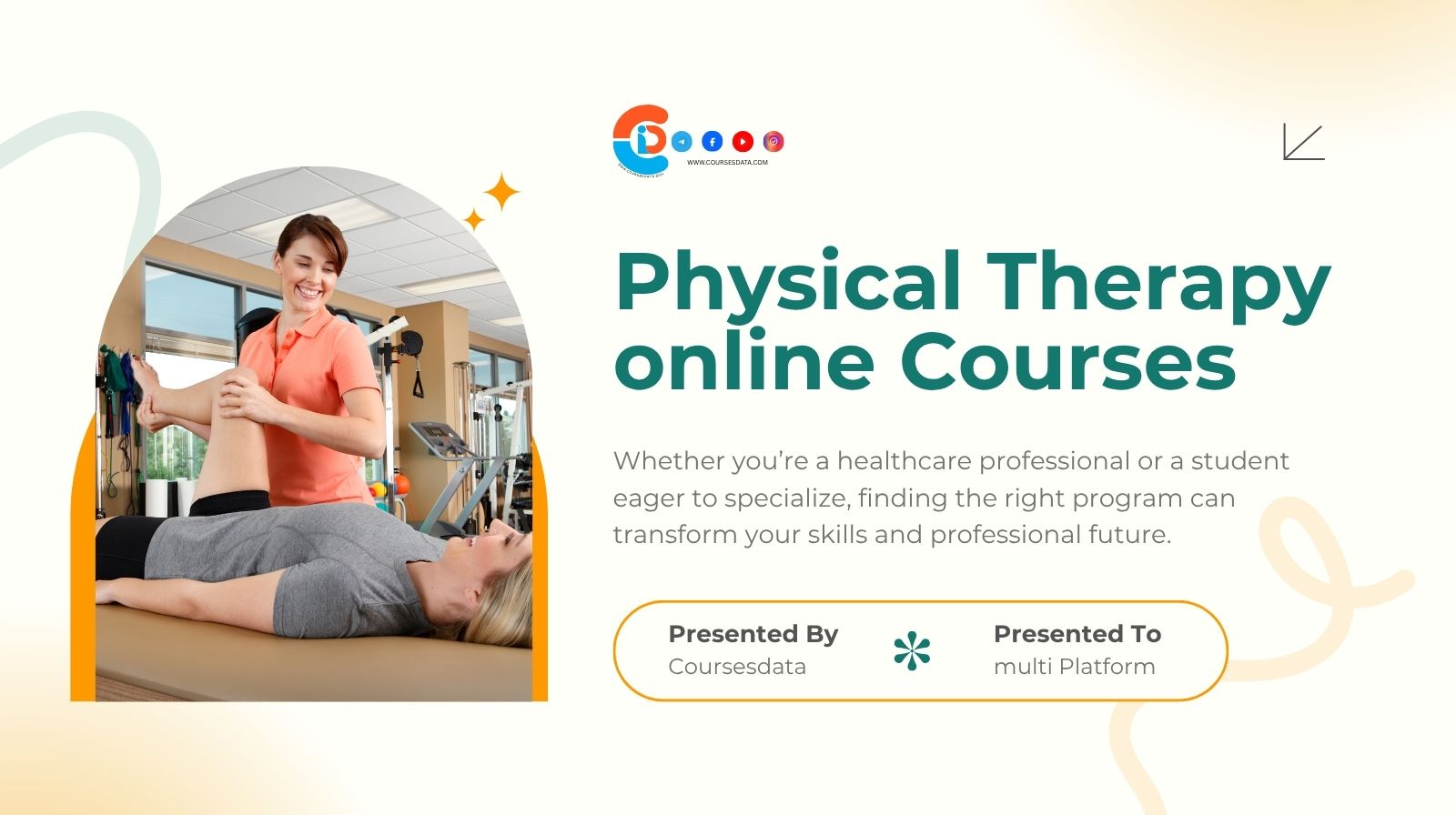
Finding the best physical therapy online courses can help physical therapists, PT students, and rehabilitation professionals develop stronger clinical reasoning and expand their knowledge without attending traditional classroom training.
This guide covers five reputable online programs in primary care, persistent pain, digital health, medical screening, and orthopedic practice, with practical details to help you choose the right course.
Best 5 Physical Therapy Online Courses
Physical therapy is a broad profession, so the right online course depends on your current level, clinical setting, and career goals.
Some therapists may need stronger primary-care screening skills.
Others may want to improve persistent pain management, orthopedic rehabilitation, or their understanding of technology in healthcare.
The five physical therapy online courses covered in this guide are:
- APTA Primary Care Certificate
- APTA Persistent Pain Management Certificate
- APTA Digital Health Certificate
- MedBridge Primary Care Physical Therapy Certificate
- MedBridge Orthopedic Excellence of the Lower Quarter Certificate
These courses are primarily intended for physical therapists, physical therapist assistants where appropriate, rehabilitation professionals, and students already pursuing professional education.
They are continuing-education programs rather than entry-level physical therapy degrees.
| Course | Main focus | Best for | Format |
|---|---|---|---|
| APTA Primary Care Certificate | Primary care and clinical decision making | PTs interested in primary-care practice | Online, asynchronous |
| APTA Persistent Pain Management Certificate | Persistent pain | Clinicians managing complex pain presentations | Online course series |
| APTA Digital Health Certificate | Technology and digital rehabilitation | PTs and PTAs interested in digital health | Online, asynchronous |
| MedBridge Primary Care Physical Therapy | Screening and referral | Direct-access physical therapists | Online certificate |
| MedBridge Orthopedic Excellence of the Lower Quarter | Lower-extremity rehabilitation | Orthopedic clinicians | Online certificate |
1. APTA Primary Care Certificate
The APTA Primary Care Certificate is a comprehensive online program designed for physical therapists who want to develop their role within primary care.
The program includes six courses and addresses several important areas of contemporary physical therapy practice.
Topics include:
- Physical therapy in primary care.
- Integration of PT services into primary-care environments.
- Direct-access practice.
- Legislative and payment considerations.
- Injury prevention.
- Health and wellness.
- Clinical decision making.
- Patient assessment.
- Referral considerations.
- Management of common primary-care presentations.
One of the most useful aspects of this certificate is its emphasis on the physical therapist as a potential first-contact healthcare professional.
When patients access physical therapy directly, the clinician must determine whether the presentation is appropriate for physical therapy management or whether another healthcare professional should become involved.
For example, a patient may visit a physical therapist because of new shoulder pain.
The therapist needs more than knowledge of shoulder exercises.
The clinician must obtain an appropriate history, perform an examination, recognize relevant warning signs, determine whether the presentation appears suitable for rehabilitation, and make an appropriate referral when needed.
The program also covers injury prevention and health promotion, which can help therapists look beyond the immediate musculoskeletal complaint.
This certificate may be particularly useful for:
- Physical therapists working in direct-access environments.
- Clinicians interested in primary care.
- PTs wanting to improve clinical decision making.
- Therapists working closely with physicians.
- Clinicians involved in community health.
- PTs interested in health and wellness.
- Therapists expanding autonomous practice skills.
The course is asynchronous, allowing learners to progress through the material online.
It should still be viewed as continuing professional education.
Completing the certificate does not replace professional licensure requirements or automatically expand a therapist’s legal scope of practice.
Official course link:
https://learningcenter.apta.org/products/primary-care-certificate
2. APTA Persistent Pain Management Certificate
The APTA Persistent Pain Management Certificate is designed for clinicians who want a more structured understanding of persistent pain and its management within physical therapy.
Persistent pain can be challenging because the patient’s symptoms, functional limitations, beliefs, behaviors, experiences, sleep, activity levels, psychological factors, and social circumstances may all influence the clinical picture.
A purely tissue-focused approach may therefore be insufficient for some patients.
The certificate includes six major areas of learning:
- Barriers and disparities in pain management.
- Trauma-informed care.
- Core concepts related to persistent pain.
- Comprehensive patient evaluation.
- Pain profiling.
- Clinical decision making.
- Psychologically informed strategies.
- Evidence-based physical therapy interventions.
- Management across different populations.
- Practical application to rehabilitation.
The course can be particularly relevant for therapists who regularly work with patients experiencing:
- Persistent low back pain.
- Persistent neck pain.
- Long-term musculoskeletal symptoms.
- Reduced physical activity because of pain.
- Fear associated with movement.
- Recurrent rehabilitation episodes.
- Difficulty returning to normal activities.
- Complex barriers to rehabilitation.
An important component of persistent pain rehabilitation is understanding that pain and tissue damage are not always directly proportional.
That does not mean symptoms are unimportant.
It means clinicians may need to consider multiple contributors to the person’s pain experience and functional limitations.
For example, one patient with persistent back pain may avoid bending because they believe movement will cause additional structural damage.
Appropriate physical therapy management may involve education, gradual exposure to activity, exercise, functional rehabilitation, and strategies addressing barriers to movement within the therapist’s professional scope.
The course also introduces psychologically informed physical therapy strategies.
This does not turn physical therapists into psychologists.
Rather, it can help them recognize relevant behavioral and psychological factors, communicate effectively, adapt rehabilitation, and refer to another professional when appropriate.
This program may be useful for:
- Musculoskeletal physical therapists.
- Clinicians working with persistent pain.
- Rehabilitation professionals treating long-term conditions.
- PTs interested in pain science.
- Therapists seeking broader patient-management strategies.
- Students wanting additional pain education.
It is especially relevant for clinicians who want to move beyond a narrow biomedical interpretation of persistent musculoskeletal symptoms.
Official course link:
https://learningcenter.apta.org/products/persistent-pain-management-certificate-a-comprehensive-learning-series
3. APTA Digital Health Certificate
The APTA Digital Health Certificate addresses one of the fastest-developing areas of physical therapy practice: the use of digital tools and technology in rehabilitation.
Physical therapists increasingly encounter telehealth, wearable devices, remote monitoring tools, mobile applications, artificial intelligence, digital outcome measures, and technology-assisted patient education.
Knowing that these technologies exist is not enough.
Clinicians also need to understand when they are appropriate, how they fit into patient care, and what practical or professional issues should be considered.
The certificate covers areas such as:
- Foundations of digital health.
- Digital physical therapy practice.
- Telehealth.
- Remote patient monitoring.
- Mobile health applications.
- Wearable technologies.
- Patient safety.
- Technology implementation.
- Data use in healthcare.
- Artificial intelligence in physical therapy.
- Professional responsibilities.
- Privacy and compliance considerations.
The program uses asynchronous online learning, making it practical for clinicians who are already working.
Digital health can support physical therapy in several ways.
For example, a therapist may use remote monitoring to review whether a patient is completing prescribed activity between appointments.
A mobile platform may help provide exercise instructions and patient education.
Wearable technology might provide information about physical activity or movement patterns.
Telehealth can also allow selected patients to receive aspects of rehabilitation remotely when appropriate.
However, digital tools should support clinical reasoning rather than replace it.
Before integrating a new platform into rehabilitation, physical therapists should consider questions such as:
- Does the technology solve a genuine clinical problem?
- Is it suitable for this patient?
- Is the information clinically useful?
- Can the patient operate the technology?
- How is patient information protected?
- Does the technology improve accessibility?
- Could it create additional barriers?
- Is remote management appropriate?
- Are professional regulations being followed?
- Does the tool support rather than distract from patient care?
Artificial intelligence is another increasingly relevant topic.
AI-based tools may assist with documentation, data interpretation, administrative workflows, education, or other tasks, but clinicians remain responsible for appropriate professional decision making.
This program may be particularly useful for:
- Physical therapists interested in telehealth.
- PTAs working with digital care systems.
- Clinic managers.
- Rehabilitation educators.
- Physical therapists using remote monitoring.
- Clinicians evaluating new healthcare technologies.
- PT students interested in future models of rehabilitation.
The program provides a useful introduction to technology integration while maintaining the focus on safe and appropriate patient care.
Official course link:
https://learningcenter.apta.org/products/digital-health-certificate
4. MedBridge Primary Care Physical Therapy Certificate
The MedBridge Primary Care Physical Therapy Certificate focuses heavily on screening, diagnostic reasoning, referral, and clinical decision making for physical therapists practicing in direct-access and primary-care environments.
It is a five-course certificate program designed for physical therapists.
The curriculum addresses several body systems and clinical situations that therapists may encounter when assessing patients whose symptoms are not necessarily straightforward musculoskeletal presentations.
Key areas include:
- Primary-care physical therapy principles.
- Diagnostic thinking.
- Referral decision making.
- Cardiovascular screening.
- Pulmonary screening.
- Neurological examination.
- Oculomotor assessment.
- Concussion considerations.
- Endocrine conditions.
- Bone-related conditions.
- Neoplastic conditions.
- Autoimmune presentations.
One of the strengths of this program is its systems-based approach.
Physical therapists commonly encounter patients whose pain, weakness, dizziness, fatigue, or functional limitations could potentially involve conditions outside routine musculoskeletal rehabilitation.
The goal is not to turn the therapist into a physician or encourage diagnosis outside professional scope.
Instead, effective screening helps the clinician decide whether to:
- Continue physical therapy management.
- Modify the examination.
- Monitor relevant findings.
- Communicate with another provider.
- Refer the patient for further assessment.
- Coordinate care with an interdisciplinary team.
Consider a patient presenting to an outpatient clinic because of difficulty walking and generalized weakness.
An inexperienced clinician might immediately focus on strengthening exercises.
A more complete primary-care approach considers the history, symptom behavior, neurological status, cardiovascular and pulmonary factors, medications where relevant, systemic symptoms, and other findings before establishing an appropriate rehabilitation plan.
That broader clinical reasoning can be especially valuable in direct-access practice.
The certificate includes online lectures, patient demonstrations, and case-based learning assessments.
It may be especially appropriate for:
- Direct-access physical therapists.
- Outpatient PTs.
- Recent graduates.
- Therapists interested in primary care.
- Clinicians wanting stronger screening skills.
- PTs working with complex presentations.
- Therapists seeking case-based continuing education.
Clinicians should remember that scope-of-practice rules differ between jurisdictions.
Course content should always be applied within the laws, professional regulations, and standards that govern the therapist’s location.
Official course link:
https://www.medbridge.com/educate/certificate-programs/77756-primary-care-physical-therapy
5. MedBridge Orthopedic Excellence of the Lower Quarter Certificate
The MedBridge Orthopedic Excellence of the Lower Quarter Certificate is a strong option for physical therapists who want more focused education in lower-extremity orthopedic rehabilitation.
The program covers evaluation and management of conditions involving areas such as the pelvis, hip, thigh, knee, ankle, and foot.
Rather than concentrating on a single joint, the curriculum uses a broader clinical decision-making framework.
The program covers topics related to:
- Pelvic conditions.
- Hip assessment.
- Hip rehabilitation.
- Thigh-related presentations.
- Knee examination.
- Knee rehabilitation.
- Ankle assessment.
- Foot conditions.
- Clinical testing.
- Treatment selection.
- Evidence-informed interventions.
- Clinical reasoning.
The certificate is particularly relevant because lower-extremity problems represent a substantial part of orthopedic physical therapy practice.
A clinician might work with:
- An athlete returning after knee injury.
- An older adult with hip-related functional limitations.
- A runner experiencing lower-leg symptoms.
- A patient recovering from an ankle injury.
- Someone experiencing persistent foot pain.
- A patient rebuilding lower-extremity strength.
- An individual preparing to return to sport.
Effective rehabilitation should not simply consist of selecting exercises associated with a diagnosis.
The therapist needs to understand the patient’s presentation, functional limitations, goals, irritability, relevant impairments, activity demands, and response to previous management.
The MedBridge program incorporates examination and treatment principles alongside clinical reasoning.
It also uses patient demonstrations and case-based assessments, which can make online education more clinically relevant than lecture-only learning.
This course may be suitable for:
- Orthopedic physical therapists.
- Recent PT graduates.
- Physical therapy residents.
- Sports rehabilitation clinicians.
- Therapists returning to orthopedic practice.
- Clinicians treating lower-extremity injuries.
- PTs seeking structured musculoskeletal education.
The program does not replace supervised clinical education or specialist certification.
Instead, it provides a structured continuing-education pathway for developing knowledge that can support orthopedic practice.
Official course link:
https://www.medbridge.com/educate/certificate-programs/26768-orthopedic-excellence-of-the-lower-quarter-certificate
How to Choose the Best Physical Therapy Online Course
The best course is not necessarily the longest or most expensive option.
Choose a program that addresses a specific gap in your knowledge.
Start by identifying your objective.
You may want to:
- Improve primary-care skills.
- Become better at patient screening.
- Develop persistent pain management knowledge.
- Strengthen orthopedic clinical reasoning.
- Learn more about digital rehabilitation.
- Prepare for direct-access practice.
- Improve evidence-informed decision making.
- Complete professional continuing education.
- Explore another clinical specialty.
- Refresh knowledge after time away from practice.
Next, examine the course provider.
A healthcare course should clearly identify:
- Who developed the content.
- Instructor qualifications.
- Target audience.
- Learning objectives.
- Course curriculum.
- Educational format.
- Continuing-education information.
- Assessment requirements.
- Certificate type.
- Professional limitations.
Be cautious with programs that promise to make learners “certified physical therapists” after completing a short online course.
Physical therapy is a regulated healthcare profession in many countries.
A continuing-education certificate is not equivalent to professional qualification or licensure.
Online Physical Therapy Courses vs. Physical Therapy Degrees
This distinction is particularly important for students.
An online continuing-education course can expand knowledge, but it generally does not qualify a person to enter professional practice as a physical therapist.
Professional physical therapy education normally includes substantial training in areas such as:
- Anatomy.
- Physiology.
- Pathology.
- Biomechanics.
- Neuroscience.
- Clinical examination.
- Therapeutic exercise.
- Rehabilitation planning.
- Clinical reasoning.
- Professional ethics.
- Patient communication.
- Supervised clinical education.
Clinical training is especially important.
A student can watch an excellent video explaining a physical examination technique, but watching the technique is not the same as demonstrating practical competency.
Professional skills require practice, feedback, clinical supervision, and appropriate patient exposure.
Students intending to become physical therapists should therefore investigate the recognized professional qualification and licensing pathway in the country where they plan to practice.
Online courses are better used as supplementary education.
How to Get More Value From Physical Therapy Online Courses
Simply watching every video from beginning to end does not guarantee meaningful learning.
Use the course actively.
Helpful strategies include:
- Take concise notes.
- Write down unanswered clinical questions.
- Review relevant anatomy when necessary.
- Complete quizzes without immediately checking notes.
- Work through patient cases independently.
- Compare recommendations with clinical guidelines.
- Discuss difficult concepts with colleagues.
- Relate course material to clinical situations.
- Review important modules later.
- Identify practical lessons you can apply safely.
Case-based learning is particularly valuable.
After completing a primary-care module, for example, create a hypothetical patient presentation and decide what information you would need before determining whether physical therapy management is appropriate.
After completing a persistent pain module, identify possible physical, psychological, behavioral, and social barriers affecting a hypothetical patient’s recovery.
For an orthopedic course, compare several rehabilitation approaches rather than simply memorizing individual exercises.
This converts passive online education into more meaningful professional learning.
Are Physical Therapy Online Courses Worth It?
High-quality online courses can be worthwhile when they address a genuine educational need.
They give clinicians the flexibility to study without leaving clinical practice and can provide access to educators outside their local area.
Potential benefits include:
- Flexible learning.
- Access from home.
- Self-paced study.
- Specialist topics.
- Clinical demonstrations.
- Structured curricula.
- Case-based education.
- Continuing professional development.
- Ability to revisit difficult material.
- Broader exposure to clinical perspectives.
However, not every course is worth purchasing.
Before enrolling, confirm whether the program matches your professional level and objectives.
Physical therapists seeking continuing-education credit should also verify whether individual courses satisfy the requirements of their relevant licensing or regulatory authority.
Conclusion
The best physical therapy online courses provide structured learning that supports real clinical needs.
The APTA Primary Care, Persistent Pain Management, and Digital Health certificates cover important areas of evolving rehabilitation practice, while MedBridge provides focused programs in primary care and orthopedic lower-extremity rehabilitation.
Choose a course according to the patients you treat, the knowledge gaps you want to address, and your professional requirements.
Online education can strengthen knowledge and clinical reasoning, but it should complement rather than replace accredited professional education, supervised experience, and appropriate clinical practice.
Frequently Asked Questions
1. What are the best physical therapy online courses?
Useful options include programs from established professional organizations and rehabilitation education providers such as APTA and MedBridge.
The best choice depends on whether you need education in primary care, pain management, orthopedics, digital health, or another clinical area.
2. Can I become a physical therapist by taking online courses?
A short online certificate generally does not qualify someone to practice as a physical therapist.
Professional practice usually requires recognized physical therapy education, supervised clinical training, and compliance with the licensing or registration requirements in the relevant country.
3. Are online physical therapy certificates recognized?
Recognition depends on the provider, course, profession, and jurisdiction.
A continuing-education certificate documents course completion but should not automatically be treated as a professional license, academic degree, or specialist certification.
4. Can physical therapy students take these courses?
Some programs allow student participation and may offer content appropriate to learners in professional physical therapy programs.
Students should use online courses to supplement their university education rather than replace formal academic and clinical training.
5. Which online PT course is best for orthopedic rehabilitation?
A program such as MedBridge Orthopedic Excellence of the Lower Quarter may be useful for clinicians concentrating on hip, knee, ankle, foot, and other lower-extremity presentations.
The right orthopedic course depends on the body region and clinical population you treat.
6. Which course is useful for direct-access physical therapists?
Primary-care programs from APTA and MedBridge are particularly relevant because they cover screening, referral, clinical decision making, and the therapist’s role in primary-care or direct-access environments.
7. Are online physical therapy courses suitable for beginners?
Some courses are appropriate for students and recent graduates, while advanced programs assume existing clinical knowledge.
Always check the target audience and prerequisites before enrolling.
8. Can online courses teach practical physical therapy techniques?
Online programs can demonstrate examination and treatment techniques and explain how they may be applied.
Practical competency, however, normally requires hands-on practice, feedback, appropriate supervision, and clinical experience.
9. How do I know whether a physical therapy online course is credible?
Check the provider, instructor qualifications, target audience, curriculum, learning objectives, evidence base, assessment methods, and continuing-education information.
Be cautious with programs making unrealistic claims about professional certification or clinical competence.
10. Which physical therapy online course should I take first?
Choose according to your immediate professional need.
A clinician moving toward direct-access practice may prioritize primary care, someone regularly managing persistent pain may choose pain education, while an orthopedic therapist treating lower-extremity conditions may benefit more from specialized orthopedic coursework.